Narrator's note: The narrator of this article is fictional; the historical information is given with its sources.
The powder box in the drawer
In my great-aunt's flat, which was cleared out after her death, in the bottom drawer of the mirrored dresser, I found a round powder box, long since empty but still faintly scented when you lifted the lid, a swansdown puff, and a photograph taken in a studio, with nothing but a year written on the back in fountain-pen ink; in the photograph the woman I later knew only in her old age looks at the lens with a hat tilted to one side, gloves on her hands and an expression at once shy and pleased with herself, as if she were posing not for me but for a country that was just then being founded.
In this chapter Saray Defteri leaves the palace and goes to the years in which that photograph was taken, the first twenty years of the Republic. How was the image of the well-groomed, modern woman born; where did she stand at school, in the street, in the newspaper; what was on her dressing table? Once again I follow the documents: the laws, the school curricula and the newspaper advertisements.
The door the laws opened
In 1924 the Law on the Unification of Education brought schooling under a single roof. On 25 November 1925 the Hat Law was passed, and in 1926 the Turkish Civil Code was adopted. Women gained the right to vote and stand in municipal elections in 1930 and in parliamentary elections in 1934; with the election of 8 February 1935 the first women deputies entered the Assembly. As the researcher Ayten Sezer Arığ writes, in the cities the ferace, the yashmak and the çarşaf gave way to the evening gown, the tailored suit, the dress and the hat.
But as we look at the photographs, one figure should be kept in mind: in 1935 only 8 per cent of women over the age of fifteen could read and write; among men the figure was 31 per cent. In other words, the "asri" (modern) woman of the newspapers was, in those years, the face of a small urban group; for the rest she was a picture to be reached.
The Girls' Institutes: needle, notebook and gymnastics
One of the institutions that drew that picture was the Girls' Institutes. The first, the İsmet Paşa Girls' Institute in Ankara, opened in 1928 with only five students; by the end of the year the number had risen to 28. In 1939 there were 14 institutes in the country, and in 1947 there were 40.
The curriculum had two faces, and the two completed one another: on one side Turkish, history, physics, chemistry, a foreign language and gymnastics; on the other dressmaking, embroidery, fashion, flower-making, cooking, home management and child care. The institute held fashion shows, and in 1935 the newspaper Ulus wrote of its influence on the fine dress and elegance of the women of Ankara.
Practical note: In the same schools a black uniform was worn, and makeup, cigarettes, trousers and long nails were forbidden. In 1934 the magazine Yedigün, too, wrote that lipstick and nail polish did not suit teachers. The well-groomed woman of the Republic was not a painted woman; she was clean, neatly dressed and measured.
Beauty contests: a "national duty"
In 1929 the newspaper Cumhuriyet organized the first nationwide beauty contest; 125 young women applied, and Feriha Tevfik came first. The winner of 1930, Mübeccel Namık, was a young woman who played volleyball and did sports. Naşide Saffet, chosen in 1931, was a teacher; after the criticism that followed, she resigned from her post.
In 1932 the newspaper called out to its readers: "Turkish girls, a national duty awaits you!" Keriman Halis, chosen Miss Turkey on 2 July that year, became Miss Universe on 31 July in Spa, Belgium, with the votes of 25 of the 28 jury members; on her return she received close to thirty thousand telegrams. The newspapers praised her "unpainted face" and made a point of writing that her hair was "not cut short". Atatürk's words, as reported by the newspapers in those days, run along the same line: natural beauty should be preserved, but the real field in which to compete is high culture and virtue. From 1934 to 1949 no contest was held.
The list of prizes given out at the contests, meanwhile, is a dressing-table inventory in itself: cologne, a hand mirror, toothpaste, cream, makeup, an electric hair dryer, a hat, silk stockings.
Health and character
That the new ideal was not a delicate woman but a healthy, agile one is best told by a radio talk:
"If we wish to see our girls beautiful, we must secure two fortunes for them: health and character." (From a radio talk by Refik Ahmet Bey; Vakit, 14 April 1932. Translation: Modalco.)
On 22 September 1930 Cumhuriyet reports that the daughters of Selim Sırrı Tarcan have opened a gymnastics hall for women. A cover of the magazine Yıldız, too, describes the "modern Turkish lady" in three words: elegant, well-informed, high-minded.
The dressing table on the newspaper page
I never found out what brand the box in my great-aunt's drawer was; but thanks to the researchers who have studied the newspapers of those years, we know what might have been in that drawer:
| Year | Product | Where the ad appeared | What it promised |
|---|---|---|---|
| 1920s | Krem Pertev (cream) | Also advertised in Akşam in 1930 and 1940 | An "astonishing" beauty; the ad shows a woman with short hair and a short skirt |
| 1931 | Faruki perfumery: powder, lipstick, greaseless cream, lotion | Cumhuriyet (19 November 1931) | Home-produced goods, said to be superior to European ones |
| 1936 | Perlodent toothpaste | Cumhuriyet (17 January 1936) | To be as dazzling as the woman in the ad |
| 1938 | Coty powder | Cumhuriyet (1 June 1938) | A French brand; the ad shows a slim, stylish woman |
| 1939 | Hasan perfumery | Cumhuriyet (15 May 1939) | The superiority of home-produced goods over European and American ones |
| 1940 | Ruj and Rimel Balsamin Kanzuk (lipstick and mascara) | Akşam (May–June 1940) | Said to be the formula of an American professor |
| 1940–1942 | Tokalon cream and powder | Akşam | White cream in the morning, pink cream in the evening; a powder shade to suit the skin |
| 1941 | Puro toilet soap | Akşam (14 November 1941) | "New good fortune" |
| 1940s | Krem Nevin hand cream | — | A cream applied before and after housework; "the hand is the expression of a woman's elegance" |
The daily ritual of the period can be read from these ads as well: cream applied morning and evening; powder before going out; toothpaste; hand cream before and after housework. In the newspaper notices of 1930, hairdressers also offer to do hair for ball evenings. One Tokalon ad even makes women question the color of their powder: according to the ad, nine women out of ten use the wrong shade. An observation relayed by the researcher Fatma Tunçer explains this interest: once the veil was lifted and the face became visible, cosmetics became an everyday need.
Today's lesson: The same ads promised "rejuvenation in ten days", based their formulas on Viennese professors and "magic" machines and, worse still, treated darker skin as a flaw and presented whitening the skin as beauty. Today we know both things: no cream makes you younger in ten days, and skin tone is not a flaw. Good care tries to protect your skin, not to change it.
Myths and facts
- "Everything changed in a day": The laws were passed within a few years, but in 1935 only 8 per cent of women could read and write. The change was seen first in the city, at school and in the newspaper.
- "The modern woman was a woman in makeup": Makeup was forbidden at the Girls' Institutes; the press praised Miss Universe for her "unpainted face". The ideal was a natural, healthy look.
- "Everyone cut their hair short": The cream ad of the 1920s shows a woman with short hair; in 1932 the newspaper writes that Miss Universe's hair is not cut short. The two lived side by side.
- "Old ads were innocent": Promises of miracles and a veneer of science were there in those days too.
Today's equivalent: five steps from the modern dressing table
The steps below are Modalco's suggestion; they take their inspiration from the morning-and-evening order in the ads of the 1930s. The products accompany your care; they do not promise exaggerated results.
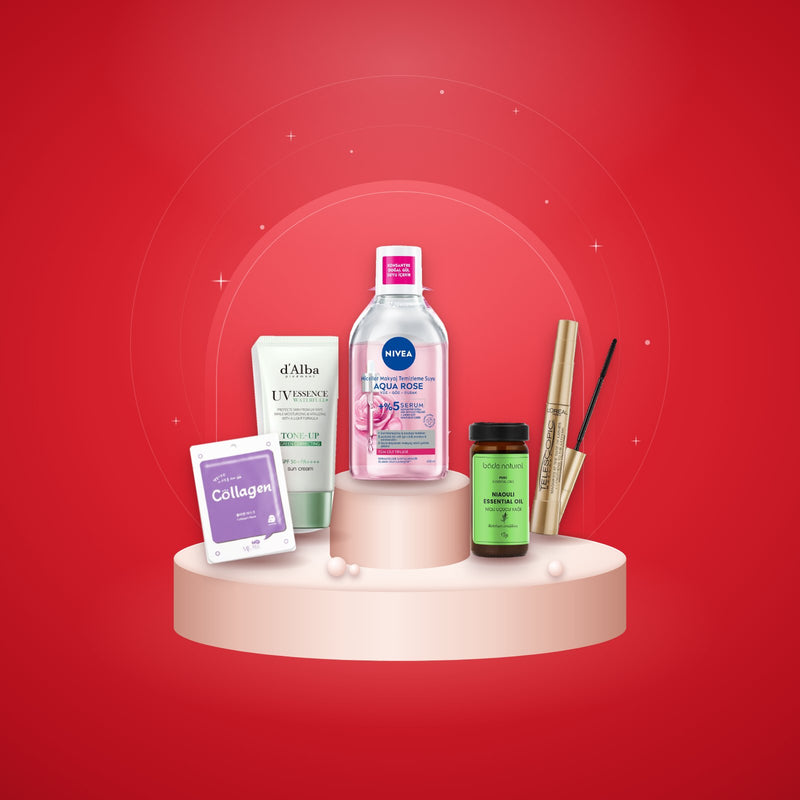
- Cleanse in the evening: Remove the day's makeup and impurities with NIVEA Soothing Micellar Water; for sensitive skin.
- Morning cream: Sun protection does not appear in the 1930s ads in the studies I read for this article; today it is the indispensable step of daytime care. NIVEA Nourishing Day Cream SPF15 is for dry skin.
- Evening cream: Today's version of "white cream in the morning, pink cream in the evening": in the evening, hydrate your skin with Garnier Hyaluron Fresh & Plump.
- Mascara: The "rimel" of 1940 is today's mascara. L'Oréal Paris Telescopic Gold adds length to your lashes.
- Lipstick: For a light touch of color, the NIVEA Tinted Lip Care Balm; it contains SPF30.
And the first fortune on Refik Ahmet Bey's list: health. A walk or some gymnastics a few days a week is not sold in any box.
Bu yazının rutini
The modern dressing table
Five steps inspired by the morning-and-evening order in the newspaper ads of the 1930s: cleanse, morning cream, evening cream, mascara and lip color.
-
1
Dressing table · Evening
 CleanseEvery eveningNIVEA Soothing Micellar Makeup Remover for Sensitive Skin 400 ml421,00 TL
-
2
Morning cream · A 1940 ad
 Morning creamEvery morningNIVEA Nourishing Day Face Cream SPF15 for Dry Skin 50 ml416,00 TL
-
3
Evening cream · A 1940 ad
 Evening creamEvery eveningGarnier Hyaluronic Fresh & Plump Plumping Sorbet Face Cream 85 ml479,90 TL
-
4
Mascara · A 1940 ad
 MascaraWhenever you likeL'Oréal Paris Telescopic Gold Lengthening Mascara Black919,90 TL
-
5
Lipstick · 1931, home-produced
 Lip colorAll dayNIVEA Tinted Lip Care Balm Red SPF30 4.8 g498,90 TL
 Cleanse
 Morning cream
 Evening cream
 Mascara
 Lip color
Sepette güncel fiyatlar ve kampanyalar geçerlidir.
Yeni ürünü önce küçük bir alanda dene. Ürünler bakıma yardımcı olur, tedavi amaçlı değildir.
Which steps suit your skin? Take the 2-minute Modalco Skin Test and let it put together the routine that suits you.
In this series: Previous article → Hürrem: The World of Care Around the Cheerful Haseki. Start of the series → Skincare from the Palace to Today.
Sources
- Ayten Sezer Arığ, "Türkiye'de Kız Enstitüleri: Gelenekten Geleceğe", Hacettepe Üniversitesi Türkiyat Araştırmaları Dergisi 20 (2014), pp. 193–215.
- Ayhan Doğan, Mustafa Kılınç, "Cumhuriyet Dönemi Türk Kadınının Modernleşmesinde Öncü Bir Kurum: İsmet Paşa Kız Enstitüsü Ankara (1928-1938)", OPUS 16/29 (2020), pp. 2371–2389.
- Ercan Çağlayan, "Kemalizm'in 'Medeniyet Fabrikası': Kız Enstitüleri", Tarih ve Gelecek Dergisi 4/3 (2018), pp. 8–35.
- Mehmet Gündüz, "Atatürk Döneminde Toplumu Dönüştürmenin Aracı Olarak Cumhuriyet Gazetesinin Düzenlediği Güzellik Yarışmaları", Türkiye İletişim Araştırmaları Dergisi 41 (2022), pp. 58–79.
- Filiz Yıldız, "Türkiye'de İlk Güzellik Yarışmaları ve Basının Öncü Rolü: Genç Cumhuriyet'in Asri Güzelleri", Etkileşim 4 (2019), pp. 66–87.
- Özlem Kılınççeker, "Türkiye'nin İlk Dünya Güzeli Keriman Halis'in Mısır Gezisi ve Yankıları", Çukurova Üniversitesi Türkoloji Araştırmaları Dergisi 8/1 (2023), pp. 295–316.
- Nurcan Pınar Eke, "Cumhuriyet Kadınının Değişen Silueti: İdeolojik Bir Araç Olarak Güzellik Yarışmaları", Anadolu Üniversitesi Sosyal Bilimler Dergisi 23, Special Issue (2023), pp. 147–170.
- Merve Akgül, "1930'lu Yılların Türkiye'sinde Basılı Reklamlarda Modern Kadın İmgesinin Temsili: Cumhuriyet Gazetesi Örneği", TOJDAC 7/4 (2017), pp. 667–677.
- Fatma Tunçer, "1929-1980 Yılları Arası Kozmetik Reklamlarında Bilim ve Teknoloji Söylemi Üzerinden İnşa Edilen Kadınlık Temsilleri: Akşam Gazetesi Örneği", Antropoloji 49 (2024), pp. 71–85.
- Ebru Gökaliler, Ezgi Saatcıoğlu, "Cumhuriyet'ten Günümüze Reklamlarda Kadın İmgesi", İletişim Kuram ve Araştırma Dergisi 64 (2023), pp. 77–99.
- Elif Aşcı, Hayri Çapraz, "Türkiye'de Milliyetçiliğin Reklamlarda Görünümü (1929-1960)", History Studies 14/2 (2022), pp. 477–488.
- "Türkiye'de kadın hakları", Vikipedi (Turkish Wikipedia): for the 1934 amendment and the election of 8 February 1935.
Senin cildine hangi saray rutini uyar?
2 dakikalık Cilt Testi'ni çözSaray Defteri okurlarına
Sultanlardan ilham alan rutinin için 100 TL
Küratörümüz, saray kadınlarının dönem kaynaklarında anlatılan bakım geleneklerinden ilham aldı ve bu geleneği bugünün içerikleriyle hazırlanmış ürünlerle modern bir rutine çevirdi. Alt limitsiz alışverişte tüm indirimlerin üzerine 100 TL ek indirim kazan.
Kupon 9 – 26 Kasım 2026 tarihleri arasında geçerlidir. Müşteri başına bir kez kullanılabilir.
The images were created with AI and do not depict a real person. The products support your care routine; they are not medical products.