Narrator's note: The narrator of this article is fictional; the historical information is given with its sources.
The steam above the domes
On winter evenings, crossing the square between Hagia Sophia and Sultanahmet at the hour when the tourists had long since withdrawn to their hotels and the simit sellers had packed up their stalls, I would see a thin steam rising from the long building that stands, almost shyly, with its low domes between the two great mosques, and each time I would think the same thing: of the tangible things left to us by one of the most talked-about women of this city, the foremost was not a crown or a jewel but a bathhouse.
Much is told about Hürrem Sultan's "beauty secrets". In this article I follow not those stories but the documents: an ambassador's single sentence, a dress damp with tears, a sultan's ghazal, a small bundle prepared for a king, and that bathhouse. Let me say it at the outset: no document is known that describes Hürrem's care routine step by step. But there are documents that describe her surroundings, and the words and objects of those surroundings; and that, it seems to me, is where the real story lies.
The cheerful one
The sources say she most probably came from Rohatyn, in today's Ukraine, was taken captive by Crimean raiders and was presented to the palace as a young girl. The name she was given is not a compliment to her beauty: she was called Hürrem because she was cheerful and smiling. In 1521, on giving birth to Prince Mehmed, she began to bear the title "haseki".
The sentence of the Venetian ambassador Pietro Bragadin, who described her, surprises today's reader: according to the ambassador, Hürrem is young but not beautiful; graceful and petite. A Turkish study renders the same sentence as "not beautiful, but sweet and charming". In 1544 another Venetian, Trevisano, writes that the sultan did not wish to know any woman but her, something unheard of among his ancestors.
So what the observers of the time recorded in Hürrem was not a flawless face but a smiling face and grace; a detail that always reminds me that what we call care has less to do with changing a face than with looking after it well.
A dress damp with tears
Some of the letters Hürrem wrote to Suleiman survive in the archives today. In a letter of 1526, written while the sultan was on campaign, she tells him she is sending a garment:
"I have sent you a dress on which I let my tears fall." (From Hürrem Sultan's letter of 1526; Presidency State Archives, translated from the modern Turkish wording published by Anadolu Agency in 2019.)
In her other letters in the Topkapı Palace Archive she writes of her longing, the children's greetings, news of the epidemic in Istanbul and rumours about the campaign. In the letters quoted in the publications I was able to read, there is no mention of kohl, of a scent or of a hammam day; the only "care item" from Hürrem's own pen is that dress she wetted with her tears and sent.
Her hair, her brows, her eyes
The one who really describes her face is the man at the other end of the letters. In his famous ghazal written under the pen name Muhibbî, Suleiman addresses his beloved: "Saçı vârım, kaşı yayım, gözü pür-fitne bîmârım." Hair, brows like a bow and a pair of eyes full of mischief; in the same ghazal he calls her "my shining moon", "the candle of my night chamber", "my spring", "my citron, my pomegranate, my bitter orange".
In the first article of the series we described the beauty vocabulary of divan poetry. This ghazal is one of the examples we have today of that vocabulary being used by a sultan for a real woman.
Adornment in the mirror of poetry
The poets of the century Hürrem lived in also carried women's adornment into their verses. In the examples compiled by literary historian Ülkü Çetinkaya, Revânî (d. 1524) mentions hands hennaed for the holiday, Fuzûlî (d. 1556) henna on the foot and musk-scented hair, Behiştî (d. 1571–72) the rastık drawn on the brows, and Zâtî (d. 1546) kohl. Hamdullah Hamdî (d. 1503), for his part, describes the meşşâta, the women who adorned Züleyha, and the rouge and white lead they applied.
Practical note: These are not records but poems; the poet describes an ideal, not daily life. Even so, they give us the adornment words of the 16th century: henna, rastık (brow dye), kohl, musk, rosewater, rouge, white lead. The traveller Thévenot, who came to Istanbul in the 17th century, also writes that women darkened their eyebrows and lashes with kohl, put henna on their nails and went to the hammam at least twice a week.
Safety note: The white lead (üstübeç) in this list is a white pigment obtained from lead. Reşad Ekrem Koçu describes how, used for years, it harmed the skin and the teeth. The same Koçu also writes that the cheek was moistened with rosewater before rouge was applied. We recommend continuing the adornments of the past today only with tested products.
A small bundle for a king
When Sigismund II Augustus came to the Polish throne in 1548, Hürrem wrote to him. With her second letter she also sent a small gift and listed it herself: two pairs of drawers and shirt drawstrings, six handkerchiefs and a hand-and-face towel. In the words of the letter, "altı dane destimal ve bir dane el yüz makraması". Then she apologizes: a gift worthy of the king could not be sent. Her daughter Mihrimah Sultan sends the king almost the same bundle.
That what the most powerful woman of an empire sent to a king was not gold or jewels but handkerchiefs and a towel has always seemed meaningful to me; for these are the things that lie closest to a person's skin and call for the most care, and in that age the way to express a friendship evidently passed through them.
The bathhouse opposite Hagia Sophia
The steaming domes at the start of this article belong to the bathhouse Mimar Sinan built opposite Hagia Sophia to bring income to Hürrem Sultan's endowments. Opened in 1556, the building is 75 metres long; the men's and women's sections follow one another along the same axis. Used for a long time as a storehouse and a carpet showroom, the bathhouse reopened as a hammam in May 2011 after a three-year restoration.
Hürrem had another bathhouse in Istanbul: the Haseki Hamamı in Eminönü, opposite the Egyptian Bazaar. It is mentioned in the endowment deed dated January 1551; it was demolished around 1930. Her truly great work, however, is the Haseki Complex, which today gives its name to the district: its mosque was completed in 1538–39, its madrasa and school a year later, and its soup kitchen and hospital in 1550. The hospital operated as a hospital until 1881.
Practical note: These were the city's bathhouses, not the palace's. In the sources I read there is no record of Hürrem bathing there; but that a haseki chose the hammam as the source of income to keep her endowments going shows how indispensable the hammam was in that city. Hürrem died on 15 April 1558; her tomb is at the Süleymaniye.
Myths and facts
- "Hürrem's beauty recipe": The recipes and routines circulating online rest on no document. She does not mention care in her letters.
- Matchless beauty: The ambassador of the time describes her as "not beautiful"; what stood out was her grace and her smiling face.
- The song in the laundry: The story that the sultan noticed her singing in the palace laundry reads, as the author who relates it also notes, like a fairy tale.
- Magic: The claim that she bewitched the sultan is a rumour reported by the ambassador Busbecq.
Today's equivalent: five steps from the Haseki's mirror
The steps below are Modalco's suggestion; they are not a documented routine of Hürrem Sultan. Each step takes its inspiration from a word that appears in this article. The products accompany your care; they do not promise exaggerated results.
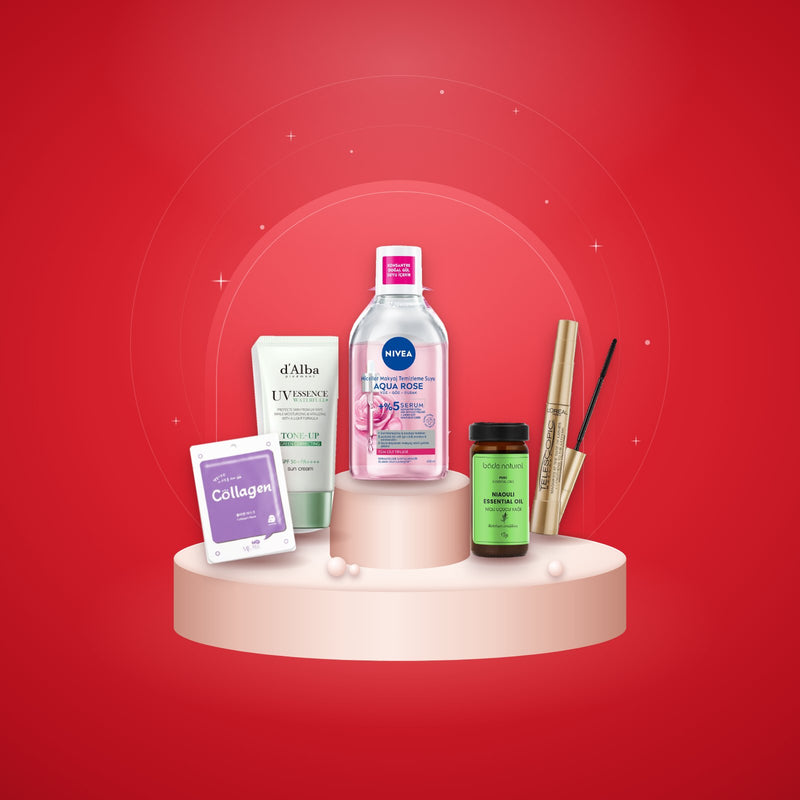
- Cleanse (rosewater): At the end of the day, remove your makeup and the day's impurities with NIVEA Aqua Rose, a two-phase micellar water with rose water.
- Scrub (hammam): Make one evening a week your own hammam day and exfoliate gently with the MJCare Face Peeling Pad.
- Rest your eyes ("eyes full of mischief"): The MJCare Brightening and Hydrating Under-Eye Mask helps hydrate the area around your eyes.
- Define your lashes (kohl): Today's answer to kohl is mascara. L'Oréal Paris Panorama adds volume to your lashes.
- Glow ("my shining moon"): L'Oréal Paris Glotion gives your skin a natural glow. And in place of rouge, the tinted lip care balm with a blush effect can be used on both your lips and your cheeks.
Today's lesson: The woman the ambassador called "not beautiful" took her name from her smiling face. The aim of care is not to acquire another face but to look after your own.
Bu yazının rutini
The Haseki's mirror
Five steps inspired by the words of a ghazal and the bathhouse opposite Hagia Sophia: cleanse, scrub, rest your eyes, define, glow.
-
1
Rosewater · The scent in the poems
 CleanseEvery eveningNIVEA Aqua Rose Bi-Phase Micellar Makeup Remover with Rose Water 400 ml459,00 TL
-
2
Hammam · Hagia Sophia, 1556
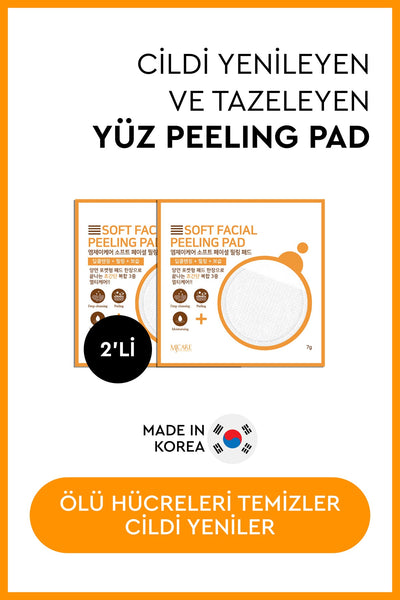 ScrubOnce a weekMJCare Face Peeling Pad 2-Pack255,90 TL
-
3
Ghazal · Eyes full of mischief
 Rest your eyesOn your hammam dayMJCare Brightening and Hydrating Under-Eye Mask (Eye Patch)201,90 TL
-
4
Kohl · Lashes and brows
 DefineFor the eveningL'Oréal Paris Volumizing Panorama Mascara Black1.298,90 TL
-
5
Ghazal · The shining moon
 GlowDaytimeL'Oréal Paris Glotion All-In-One Natural Glow Highlighter 902 Light Glow 40 ml1.176,90 TL
 Cleanse
 Scrub
 Rest your eyes
 Define
 Glow
Sepette güncel fiyatlar ve kampanyalar geçerlidir.
Yeni ürünü önce küçük bir alanda dene. Ürünler bakıma yardımcı olur, tedavi amaçlı değildir.
Which steps suit your skin? Take the 2-minute Modalco Skin Test and let it put together the routine that suits you.
In this series: Previous article → Istanbul's Water: From the Fountain to the Shower. Start of the series → Skincare from the Palace to Today.
Sources
- Cahit Baltacı, "Hürrem Sultan", TDV İslâm Ansiklopedisi, vol. 18 (1998), pp. 498–500.
- Nejat R. Uçtum, "Hürrem ve Mihrümah Sultanların Polonya Kıralı II. Zigsmund'a Yazdıkları Mektuplar", Belleten 44/176 (1980), pp. 697–716.
- Ülkü Çetinkaya, "Osmanlı Kültüründe Kadın Süs Malzemelerinin Edebiyata Yansımaları", Hacettepe Üniversitesi Türkiyat Araştırmaları Dergisi 12 (2010), pp. 89–126.
- Sema Doğan, "Haseki Külliyesi"; Semavi Eyice, "Haseki Hamamı"; "Haseki Sultan Hamamı", TDV İslâm Ansiklopedisi, vol. 16 (1997).
- Tom Verde, "Malika IV: Hürrem Sultan (Roxolana)", AramcoWorld, September–October 2016.
- "Kanuni ile Hürrem Sultan'ın aşkı devlet arşivlerinde", Anadolu Agency, 14 February 2019.
- Müzeyyen Altunbay, "16. ve 19. Yüzyılları Arasındaki Yabancı Seyahatnamelerde Osmanlı Devleti'ndeki Kadın Algısı", Uluslararası Sosyal Araştırmalar Dergisi 8/41 (2015).
- "Hürrem Sultan Hamam", Wikipedia (English): for the bathhouse's opening year, its length and its reopening in 2011.
Senin cildine hangi saray rutini uyar?
2 dakikalık Cilt Testi'ni çözSaray Defteri okurlarına
Sultanlardan ilham alan rutinin için 100 TL
Küratörümüz, saray kadınlarının dönem kaynaklarında anlatılan bakım geleneklerinden ilham aldı ve bu geleneği bugünün içerikleriyle hazırlanmış ürünlerle modern bir rutine çevirdi. Alt limitsiz alışverişte tüm indirimlerin üzerine 100 TL ek indirim kazan.
Kupon 9 – 26 Kasım 2026 tarihleri arasında geçerlidir. Müşteri başına bir kez kullanılabilir.
The images were created with AI and do not depict a real person. The products support your care routine; they are not medical products.