Narrator's note: The narrator of this article is fictional; the historical information is given with its sources.
By the steamed-up window
I first read the letter in which Lady Mary describes the Sofia hammam one winter morning on the lower deck of the ferry from Karaköy to Kadıköy, beside a window fogged with breath and the steam of tea; amid the cries of the gulls, the hum of the engine and the clink of spoons against glasses, marvelling that a letter written three hundred years ago could carry me, at one and the same time, beneath a warm dome and into the crowd of my own city.
Edirne, 1 April 1717. Lady Mary Wortley Montagu, wife of the British ambassador in Istanbul, is recounting in her letters the journey from Belgrade to Edirne. On the way, she spends a day in Sofia, then one of the important cities of Ottoman Rumelia and today the capital of Bulgaria. In a letter to a friend, she sets that day down on paper.
At ten in the morning, so as not to be recognized, she takes a plain Turkish coach to one of the city's famous hot-spring baths: the women's hammam.
Beneath five domes
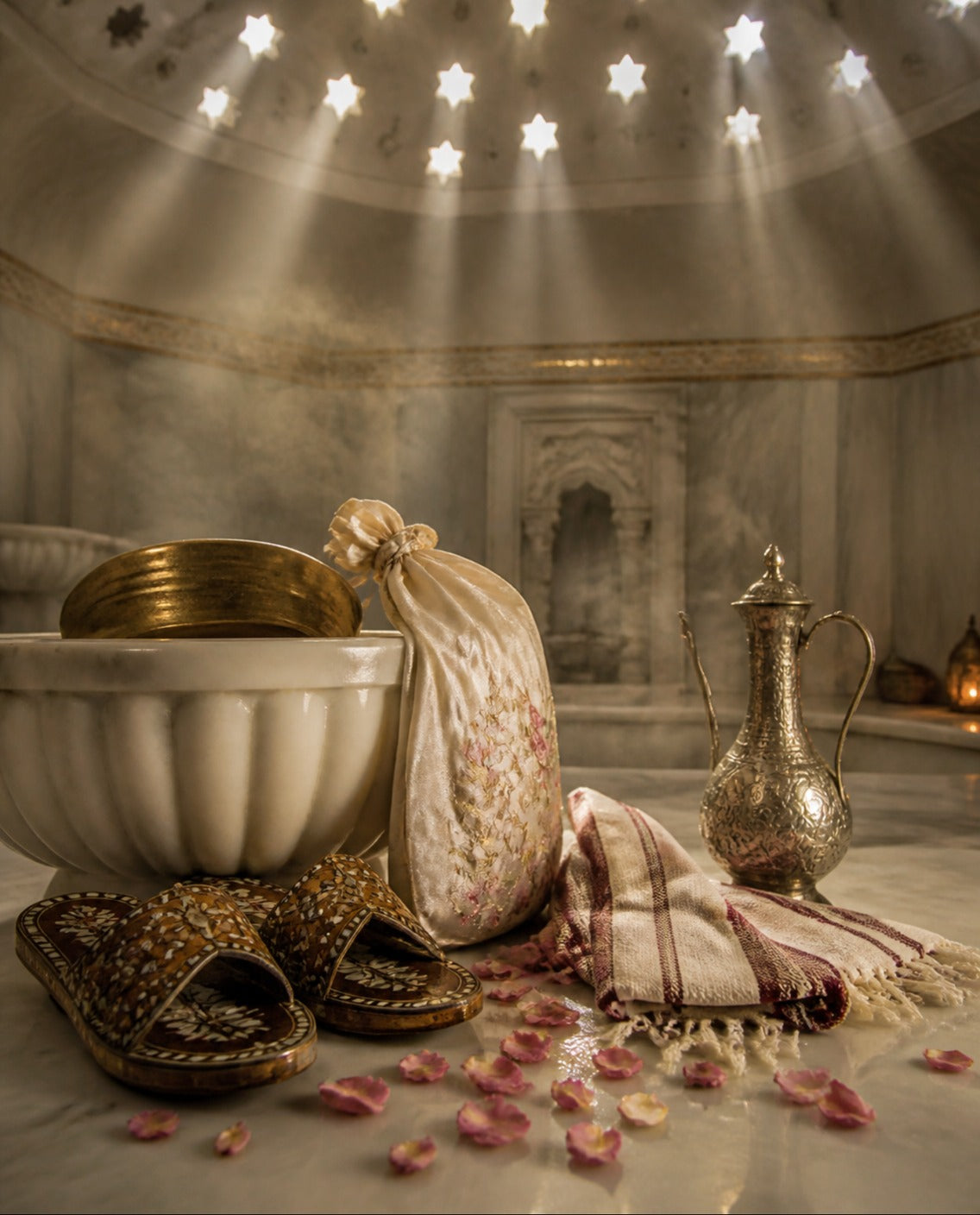
The bathhouse is made up of five stone domes. There are marble sofas, and cold water runs from the fountains. In the innermost room, the hot, sulphurous steam is so thick that it is impossible to stay dressed.
There are about two hundred women inside. They greet Lady Mary with "Uzelle, pek uzelle", that is, "Charming, very charming." The ladies sit on the first row of sofas, spread with carpets and cushions, and their maids on the second row just behind them.
Practical note: According to Lady Mary, women go to the hammam once a week and stay there for four or five hours. They pass from the hot room into the cool room without catching a chill. So the hammam is not just a bath but a weekly day of care: warm up, cleanse, cool down, rest.
The women's coffee house
Coffee and sherbet are passed around, and the conversation never stops. Lady Mary gives the place a most fitting name:
'Tis the women's coffee-house, where all the news of the town is told. (Lady Mary Wortley Montagu, Letter XXVI, 1 April 1717. Abridged by Modalco.)
Lady Mary adds a playful note: the news is told here, and the gossip is invented here too. In those days, while men met in coffee houses, the women's meeting place was the hammam. Beyond bathing, the hammam was a place to rest, to beautify and to socialize.
When I read that line I looked up from the book and around me: on the bench opposite, two women holding tulip-shaped tea glasses were talking in low voices, one showing the other a photograph on her phone. The coffee house had changed its address; the coffee house itself was still there.
Beauty in the hammam: braided hair
While the ladies recline on their cushions, their maids braid their hair in all kinds of styles. In another letter written the same day, Lady Mary describes how thick this hair was. In one lady's hair she counts 110 tresses braided with pearls and ribbons, and writes that all of them were natural.
More than a hundred years later, in Istanbul, Julia Pardoe also describes how hair was tied up in embroidered handkerchiefs after the bath. But she adds a warning: going to the hammam too often wears out the hair.
Skin and the hammam
Lady Mary writes that most of these women had shiningly white skin, and she compares their figures to those painted by Guido or Titian. In her other letter of the same day, she says that Turkish women have "the most beautiful complexion in the world". Pardoe, for her part, links this complexion to frequent visits to the hammam.
The corset anecdote
The ladies invite their guest to share the pleasures of the hammam. The most distinguished lady urges Lady Mary to undress and bathe. When Lady Mary opens her shirt and shows the stays beneath, the ladies are satisfied: they believe she has been locked into this "machine" by her husband. On one side, Europe's tight corset; on the other, the ease of the hammam.
I smile every time I read this scene; because the ladies of the hammam are so sure that the polite stranger before them has been shut in a cage that they give up insisting at once.
As the ferry drew up to the Kadıköy pier I closed the book. What stayed with me as I left Lady Mary's hammam and went back to my own day was not the splendour of the marble or the domes but the unhurriedness of those four or five hours: to warm up, to cleanse, to cool down, to rest, and to do all of it talking, laughing, without haste.
Today's equivalent: a hammam day at home
We may not have four or five hours, but the order of the hammam works at home too. Set aside one evening a week for yourself and build your hammam day at home with these steps. The products accompany you through each step; they do not promise exaggerated results.
- Warm up: Soften your skin with a warm shower. If you want to reduce chlorine and limescale in your shower water, the Shower Care Set comes with the Madeca shower filter.
- Scrub (kese): Exfoliate gently once or twice a week. The Peeling Trio brings face, hand and foot care together in one pack.
- Cool down: Today's answer to the hammam's cool room is toner. The Rice Extract Toner helps hydrate your skin.
- Moisturize: For "velvet skin", lock moisture into your skin with Garnier Hyaluron Fresh & Plump.
- Rest: Take your coffee and lean back with a 15-minute sheet mask: On Pearl or On Royal Jelly. We explain how to use the mask in the Weekly Mask Ritual article of the Modalco K-Beauty Guide.
Pardoe's warning for hair: Hot water and frequent washing tire the hair. On your hammam day at home, protect your hair from very hot water; after washing, wrap it in a soft towel, like the handkerchiefs Pardoe describes.
Bu yazının rutini
A hammam day at home
The order of the hammam Lady Mary saw in Sofia in 1717, in five steps at home: warm up, scrub, cool down, moisturize, rest.
-
1
The hot room · Marble basin
 Warm upHammam dayModalco Shower Care Set – Madeca Shower Filter + Cracked Heel Cream1.199,00 TL
-
2
The kese of the hammam
 Scrub1–2 times a weekMJCare Peeling Trio – Face Peeling Pad + Hand Peeling Mask + Foot Peeling Mask583,90 TL
-
3
The cool room · A cool fountain
 Cool downEvery eveningBibimcos Rice Extract Toner 30 ml252,00 TL
-
4
Velvet skin
 MoisturizeMorning and eveningGarnier Hyaluronic Fresh & Plump Plumping Sorbet Face Cream 85 ml479,90 TL
-
5
A break for coffee and sherbet
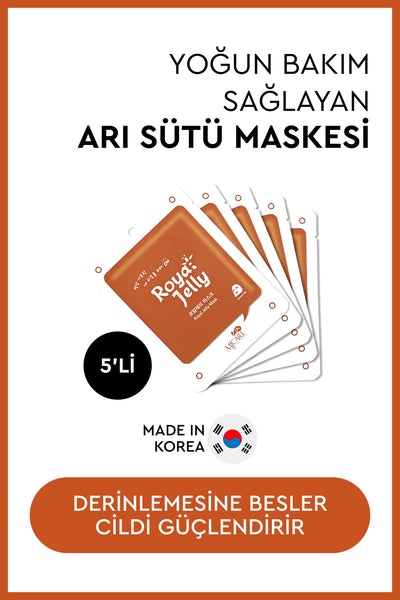 RestHammam day, 15 minutesMJCare On Royal Jelly Sheet Mask 5-Pack268,90 TL
 Warm up
 Scrub
 Cool down
 Moisturize
 Rest
Sepette güncel fiyatlar ve kampanyalar geçerlidir.
Yeni ürünü önce küçük bir alanda dene. Ürünler bakıma yardımcı olur, tedavi amaçlı değildir.
Which steps suit your skin? If your skin is sensitive, keep your kese day to once a week. Leave the rest to the 2-minute Modalco Skin Test: it will put together the routine that suits you.
In this series: Previous article → Skincare from the Palace to Today. Next article → the bridal bath Lady Mary witnessed in Istanbul: A Bridal Hammam in Istanbul, 1718.
Sources
- Lady Mary Wortley Montagu, Turkish Embassy Letters (1763). Letters XXVI and XXIX (Edirne, 1 April 1717).
- Julia Pardoe, The City of the Sultan and Domestic Manners of the Turks in 1836 (1837), vol. 1, chapter II.
Senin cildine hangi saray rutini uyar?
2 dakikalık Cilt Testi'ni çözSaray Defteri okurlarına
Sultanlardan ilham alan rutinin için 100 TL
Küratörümüz, saray kadınlarının dönem kaynaklarında anlatılan bakım geleneklerinden ilham aldı ve bu geleneği bugünün içerikleriyle hazırlanmış ürünlerle modern bir rutine çevirdi. Alt limitsiz alışverişte tüm indirimlerin üzerine 100 TL ek indirim kazan.
Kupon 9 – 26 Kasım 2026 tarihleri arasında geçerlidir. Müşteri başına bir kez kullanılabilir.
The images were created with AI and do not depict a real person. The products support your care routine; they are not medical products.